
For RV fleet operators, maintenance is one of the most direct drivers of uptime, customer satisfaction, and revenue performance. When vehicles fall out of sync with a consistent maintenance schedule, the impact shows up quickly through unexpected downtime, delayed turnovers, and missed booking opportunities.
A well-structured fleet maintenance schedule is a core part of any modern RV fleet management platform, helping operators extend vehicle lifespan, maintain higher utilization, and keep every unit rental-ready. Fleetsync, as a RV rental management software solution, connects maintenance planning directly to reservations, scheduling, and fleet activity so operators can stay ahead of service needs without relying on manual tracking or disconnected systems.
Why Maintenance Scheduling Matters in Fleet Operations
As fleets grow, maintenance becomes harder to manage without a structured fleet maintenance management solution. Oil changes, tire rotations, inspections, and repairs tracked across spreadsheets or disconnected tools make it difficult to maintain a clear picture of vehicle readiness.
Without a structured fleet maintenance program, operators often face:
- Unexpected vehicle downtime during peak booking periods
- Missed or delayed service intervals
- Overlapping reservations and maintenance windows
- Reduced fleet utilization due to unplanned repairs
- Higher long-term repair costs from deferred servicing
A consistent vehicle fleet maintenance approach turns reactive repairs into proactive planning, keeping fleets operational when demand is highest.
Step 1: Build Maintenance Intervals Around Usage, Not Just Time
The most effective fleet maintenance strategy is based on usage patterns rather than fixed calendar intervals. RVs with higher utilization require more frequent servicing, while lower-use units may follow time-based cycles.
Key elements of a strong preventive fleet maintenance plan include:
- Oil changes and fluid checks
- Tire wear inspections and rotations
- Brake system servicing
- Battery and electrical system checks
- Interior and appliance inspections
- Seasonal prep and winterization
Fleetsync synchronizes maintenance planning with real-time utilization data inside a fleet booking software environment, ensuring service intervals reflect actual demand patterns instead of static assumptions.
Step 2: Centralize Maintenance Tracking in One System
When maintenance records are scattered across multiple tools, it becomes difficult to manage maintenance at scale. Operators lose visibility on what has been completed, what is pending, and what is overdue.
A centralized system improves commercial fleet maintenance operations by enabling operators to:
- Assign maintenance tasks to internal technicians and external service providers
- Track service status from request to completion
- Maintain full repair and inspection history per vehicle
- Reduce duplicate or missed service orders
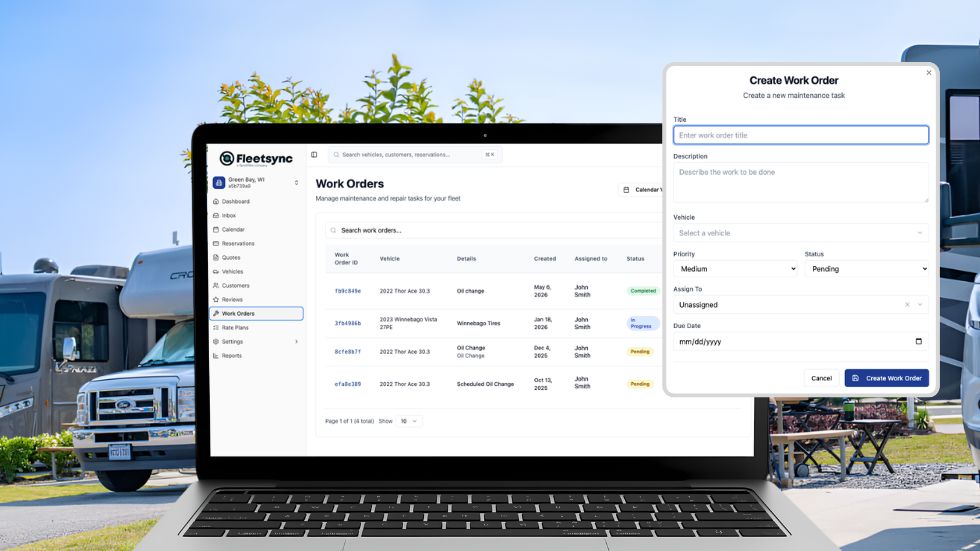
Fleetsync supports structured workflows within a RV fleet management platform, allowing teams to create custom maintenance orders for everything from oil changes to drivetrain repairs, with role-based permissions for technicians, vendors, and owners, empowering every point of contact within your fleet to stay in sync.
Step 3: Align Maintenance With Reservations Using a Unified Calendar
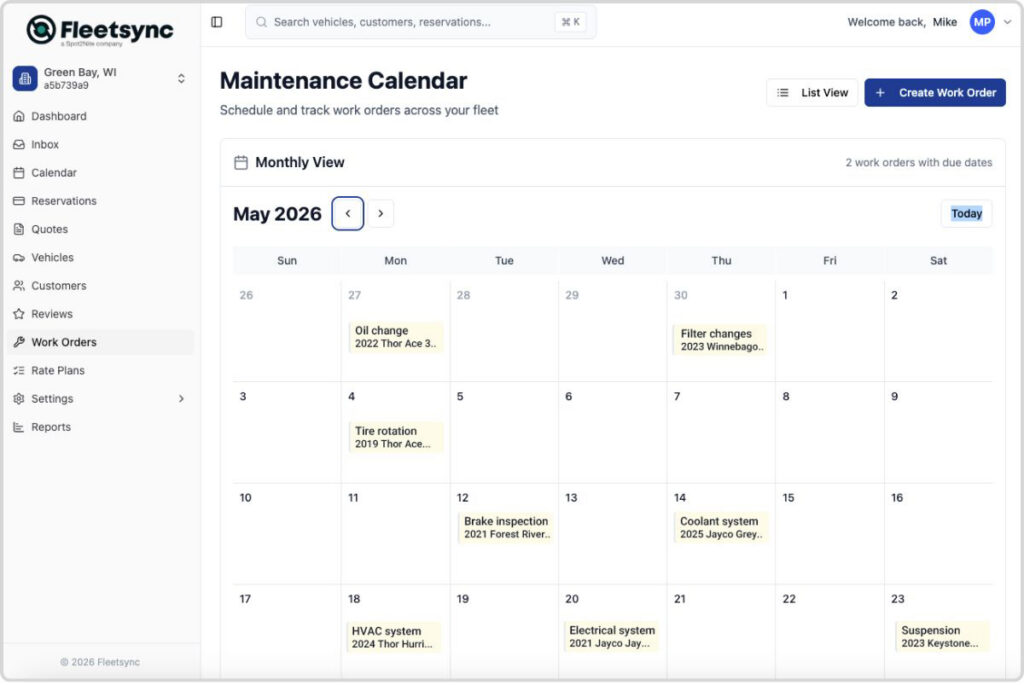
One of the biggest challenges in fleet maintenance scheduling is coordinating service windows with booking demand. When maintenance is not connected to reservations, it becomes easy to block vehicles at the wrong time or unintentionally reduce availability during peak periods.
An effective fleet maintenance strategy ensures service windows are planned around real booking patterns so vehicles stay revenue-ready while still receiving necessary upkeep. Maintenance should never sit in isolation from operations, especially as fleet size grows.
A calendar-based system brings maintenance, reservations, and availability into a single operational view. This makes it easier to:
- Avoid scheduling service during high-demand booking periods
- Cycle vehicles into maintenance during natural low-utilization gaps
- Account for inspection and prep time within turnaround windows
- Maintain accurate, real-time availability across the fleet
With a unified calendar, operators can instantly see how maintenance decisions affect booking capacity and adjust accordingly before conflicts occur.
Fleetsync connects maintenance scheduling directly with reservations inside a unified RV fleet management platform, ensuring vehicles in service are automatically blocked from booking and fully visible across the calendar. Real-time updates keep availability accurate as changes happen, reducing gaps between planning and execution.
A well-structured fleet maintenance plan is most effective when scheduling and availability are fully aligned, allowing operators to protect revenue while maintaining consistent service standards across the fleet.
Step 4: Assign Clear Roles for Maintenance Execution
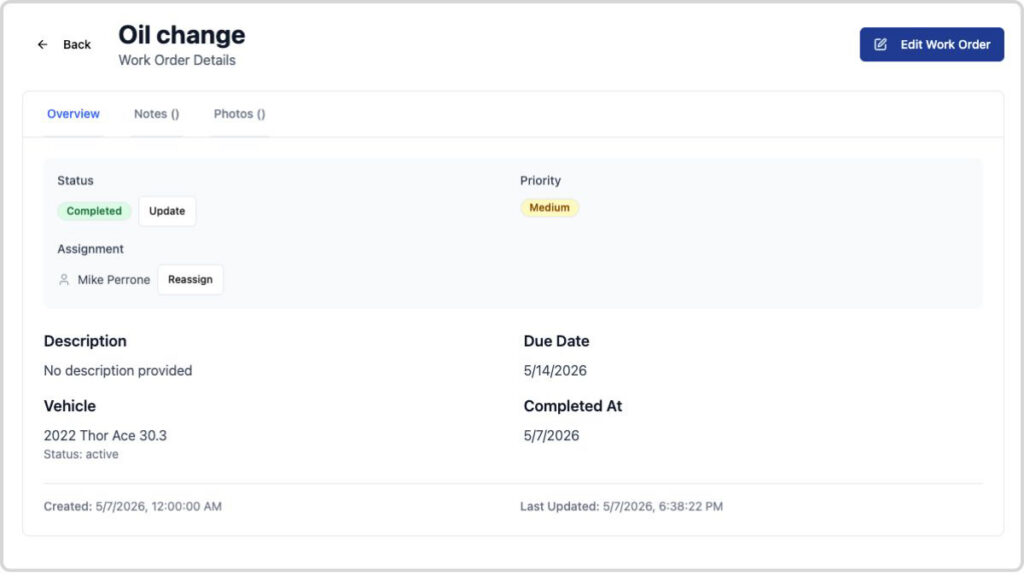
As fleets scale, vehicle fleet maintenance responsibilities often span internal teams, external vendors, and consigned owners. Without clear structure, updates can be missed or duplicated.
A scalable fleet maintenance program should include:
- Internal technicians managing inspections and repairs
- External vendors handling specialized work
- Fleet managers overseeing approvals and scheduling
- Consigned owners with visibility into vehicle status
Fleetsync supports role-based workflows, ensuring each stakeholder only interacts with the parts of the maintenance process relevant to them.
Step 5: Monitor Maintenance History to Improve Fleet Performance
Over time, maintenance records become a key input into long-term commercial fleet maintenance planning. They reveal which vehicles require more servicing, which models perform best, and where costs are concentrated.
Tracking history supports:
- Identifying high-maintenance vehicles for replacement planning
- Improving forecasting for future service costs
- Refining preventive fleet maintenance schedules
- Increasing overall fleet efficiency and uptime
Fleetsync consolidates this data, linking service history directly with utilization and revenue performance.
Connecting Maintenance to Fleet Revenue
Maintenance is not just operational upkeep—it directly impacts revenue performance. Every day a vehicle is out of service reduces booking potential and weakens fleet utilization.
A structured fleet maintenance strategy improves:
- Fleet uptime and availability
- Booking reliability and customer satisfaction
- Long-term asset value
- Predictability across seasonal demand
By connecting maintenance scheduling, reservations, and utilization data, Fleetsync functions as a complete RV fleet management platform designed to reduce downtime and support scalable growth.
Building a Smarter Maintenance Strategy With Fleetsync
Fleetsync brings maintenance scheduling, reservations, and fleet operations into one connected RV rental management software system. Instead of relying on fragmented tools, operators gain a unified view of every vehicle’s status, service needs, and booking availability.
With integrated fleet maintenance management, operators can reduce downtime, improve utilization, and scale their operations without adding unnecessary complexity.
Book a demo today for a closer look at how Fleetsync keeps maintenance, reservations, and availability fully aligned in one place so your fleet stays bookable and revenue-ready—anywhere, anytime.